Inspiration › Short-Term Vision · 3 of 4
90-Day Sprint
By RISE Business Framework · Created by Gary Harper and Brandon McCurdy · Reviewed
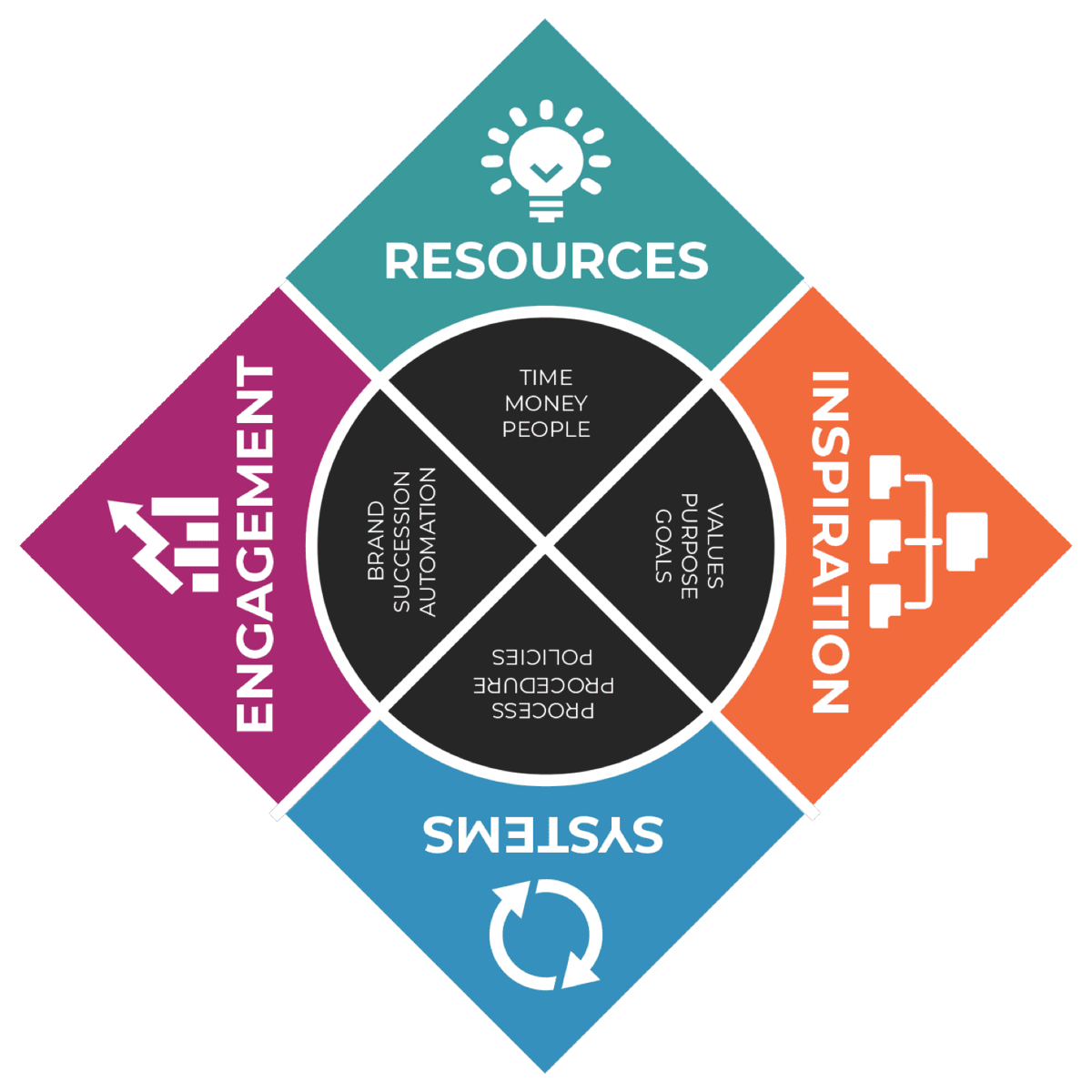
A 90-day sprint is a short, focused period for hitting a quarter of your yearly goal. The short window creates urgency and sharpens priorities. RISE repeats the header of date, revenue, gross profit, net profit and deliverables. It then asks for four 90-day F.A.S.T. goals in each RISE quadrant.
How strong is your Inspiration quadrant? Take the free RISE Business Assessment
How RISE does it
- The sprint should be a quarter segment of the yearly goal.
- Evaluate what can realistically be achieved in three months.
- Write four F.A.S.T. goals for each RISE quadrant.
- Measure progress as you go along.
90-Day Sprint is one of four tools in Short-Term Vision, part of the Inspiration quadrant of the RISE Business Framework.
The RISE tool
What are your 90-day F.A.S.T. goals?
After the header (Date · Revenue · Gross Profit · Net Profit · Deliverables), write four goals per quadrant.
| Resources | Inspiration | Systems | Engagement |
|---|---|---|---|
| 1. | 1. | 1. | 1. |
| 2. | 2. | 2. | 2. |
| 3. | 3. | 3. | 3. |
| 4. | 4. | 4. | 4. |
F.A.S.T. goals push boundaries, stay specific and keep the team transparent and aligned.
How to build a 90-day plan for your business
A 90-day plan works because the window is short enough to feel urgent. RISE calls it the 90-Day Sprint: a quarter-sized slice of the yearly goal, with four goals in each quadrant. If you think in 30-60-90 terms, the sprint gives you the structure for each checkpoint.
- 1
Start from the 1-Year Target
Take this year's revenue, gross profit, net profit and deliverables from your 1-Year Target and cut out the quarter's share.
- 2
Fill in the sprint header
Date, revenue, gross profit, net profit and deliverables for the next 90 days.
- 3
Write four F.A.S.T. goals per quadrant
Four for Resources, Inspiration, Systems and Engagement. RISE describes F.A.S.T. goals as ambitious, specific, transparent and aligned.
- 4
Choose The Four
From those 16 goals, name the four projects that must happen this quarter. Those are The Four, each with four milestones.
- 5
Set day 30, 60 and 90 checkpoints
Spread each project's milestones across the quarter so there is a checkpoint at day 30 and day 60, with the finish at day 90. That is the 30-60-90 rhythm inside the sprint.
- 6
Review weekly, reset quarterly
Track progress in the weekly Organizational Meeting and set the next sprint at the quarterly Strategic Meeting.
30-60-90 day plan vs 90-Day Sprint
A 30-60-90 day plan is usually written for one person starting a new role. The 90-Day Sprint is the same idea applied to the whole business: what the company must achieve this quarter, split across all four quadrants so growth stays balanced.
Keep it realistic
RISE asks you to evaluate what can realistically be achieved in three months. A sprint with 16 goals and no priority is a wish list. The Four forces the choice.
AI RISE Coach
Work through 90-Day Sprint with the AI RISE Coach
“Walk me through 90-Day Sprint in the RISE Business Framework and help me apply it to my business.”
Quick self-check
“We have quarterly and annual goals that are reviewed and adjusted regularly by the leadership team.”
Frequently asked questions
What is a 90-day business plan?
It is a plan for the next quarter that breaks a yearly goal into smaller, achievable goals. RISE calls it the 90-Day Sprint.
Why use 90-day goals?
Short-term goals create the immediacy needed to stay motivated. They also force clear task prioritization.
What are F.A.S.T. goals?
In RISE, F.A.S.T. goals are ambitious, specific, transparent and aligned. They are set for each quadrant in the 90-Day Sprint.
The other tools in Short-Term Vision
- 3-Year ProjectionPicture the business three years out: the numbers, the deliverables and what you will need to get there.
- 1-Year TargetSet this year's numbers and four annual commitments in each RISE quadrant.
- The FourThe four projects that must happen in the next 90 days, each broken into milestones.
Related in another quadrant: Effective Meetings