Inspiration · Topic 4 of 4
What is short-term vision?
By RISE Business Framework · Created by Gary Harper and Brandon McCurdy · Reviewed
Short-term vision is the set of dated goals that move a business toward its long-term purpose. RISE builds it as a cascade. A 3-Year Projection feeds a 1-Year Target. The 1-Year Target feeds a 90-Day Sprint. The Four names the four projects that must happen in the next 90 days.
Key takeaways
- The 3-Year Projection, 1-Year Target and 90-Day Sprint share one header: date, revenue, gross profit, net profit and deliverables.
- Annual commitments and 90-day goals are set across Resources, Inspiration, Systems and Engagement.
- The sprint should be a quarter segment of the yearly goal.
- The Four are four quarterly projects, each broken into milestones.
Short-Term Vision in the RISE Business Framework
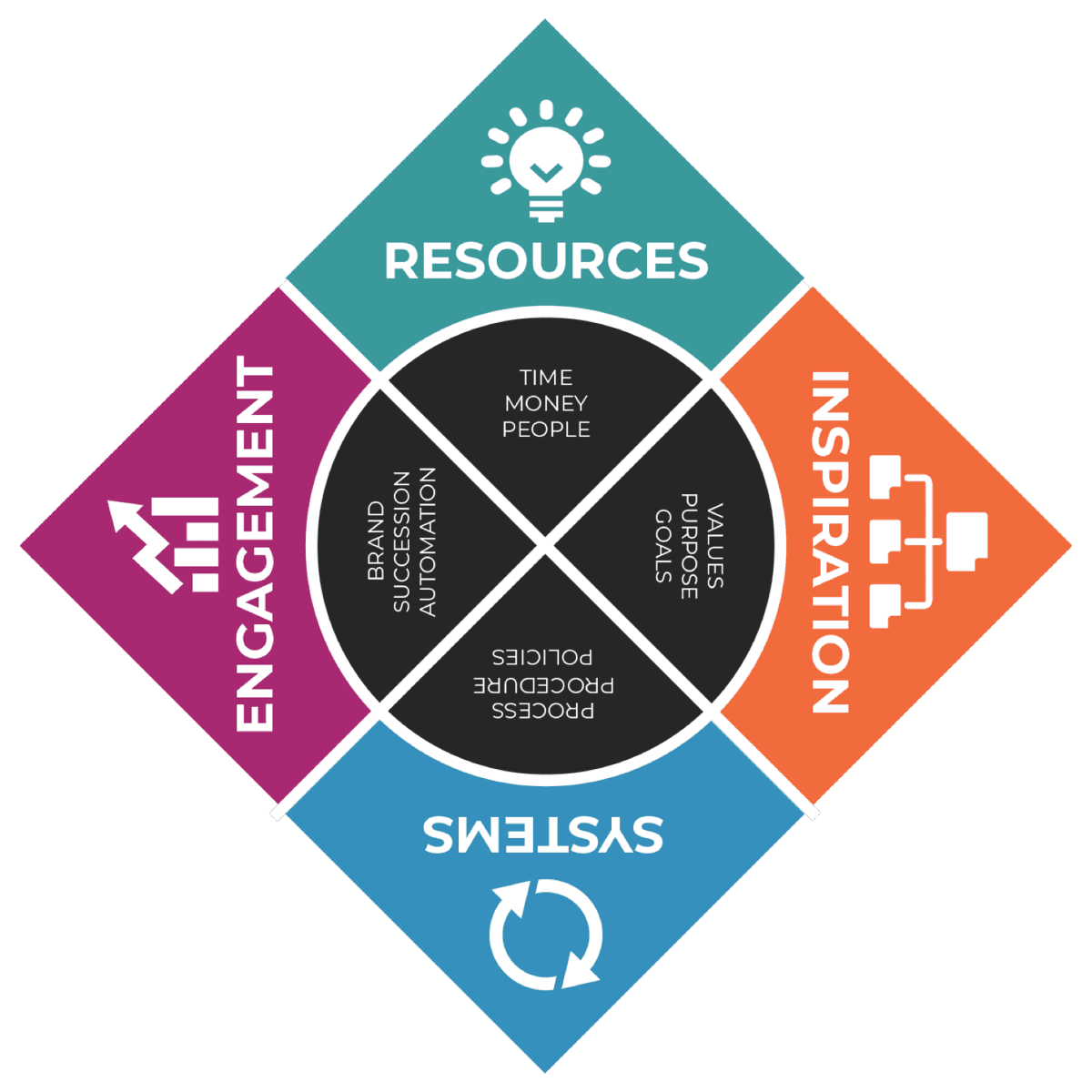
Short-Term Vision is the fourth pillar of the Inspiration quadrant. It turns purpose into numbers with dates. Each worksheet starts with the same header: date, revenue, gross profit, net profit and deliverables.
The targets cascade from three years to one year to 90 days. The 1-Year Target and 90-Day Sprint spread commitments across the four RISE quadrants. The Four then names the projects that must happen this quarter.
Why short-term vision matters
A long-term vision without near-term targets stays a nice idea. Teams cannot tell what to work on this quarter. Progress is hard to measure.
Without a short horizon, urgency fades and priorities blur. RISE uses 90-day goals to create the immediacy needed to stay motivated.
“It's easier to redirect a moving object than to set a stagnant one into motion.”Gary Harper
The 4 tools of Short-Term Vision
1 of 4
3-Year Projection
Picture the business three years out: the numbers, the deliverables and what you will need to get there.
2 of 4
1-Year Target
Set this year's numbers and four annual commitments in each RISE quadrant.
3 of 4
90-Day Sprint
A quarter-sized slice of the yearly goal, with four F.A.S.T. goals in each RISE quadrant.
4 of 4
The Four
The four projects that must happen in the next 90 days, each broken into milestones.
How to build short-term vision with RISE
- 1
Project three years out
Set the date, revenue, gross profit, net profit and deliverables. List what you will need in team, products, customers, locations, departments, marketing and your role.
- 2
Set the 1-Year Target
Fill in the same header for one year. Write four annual commitments for each RISE quadrant.
- 3
Plan the 90-Day Sprint
Make the sprint a quarter segment of the yearly goal. Write four F.A.S.T. goals for each quadrant.
- 4
Name The Four
Pick the four projects that must happen in the next 90 days. Break each into milestones.
- 5
Review and adjust
Have the leadership team review progress against the targets and adjust them regularly.
Quick self-check
“We have quarterly and annual goals that are reviewed and adjusted regularly by the leadership team.”
AI RISE Coach
Plan your 90-Day Sprint with the AI RISE Coach
“Help me turn our 1-Year Target into a 90-Day Sprint and pick The Four for this quarter.”
Frequently asked questions
How do you set short-term goals for a business?
Start from a 3-Year Projection and work back to a 1-Year Target and a 90-Day Sprint. Then pick the four projects that must happen this quarter.
What is the difference between long-term and short-term vision?
Long-term vision defines why the business exists and where it is going. Short-term vision sets the dated targets and projects that get you there.
How often should business goals be reviewed?
RISE works in 90-day sprints, so goals are reviewed at least every quarter. The leadership team adjusts them as needed.
Related in RISE
- Culture (Inspiration)
- Effective Meetings (Systems)
- Finance (Resources)
- The Inspiration quadrant
Further reading
- SMART Goals: definition and examples (Investopedia)
- Gross Profit: what it is and how to calculate it (Investopedia)
- Strategic planning (Harvard Business Review)