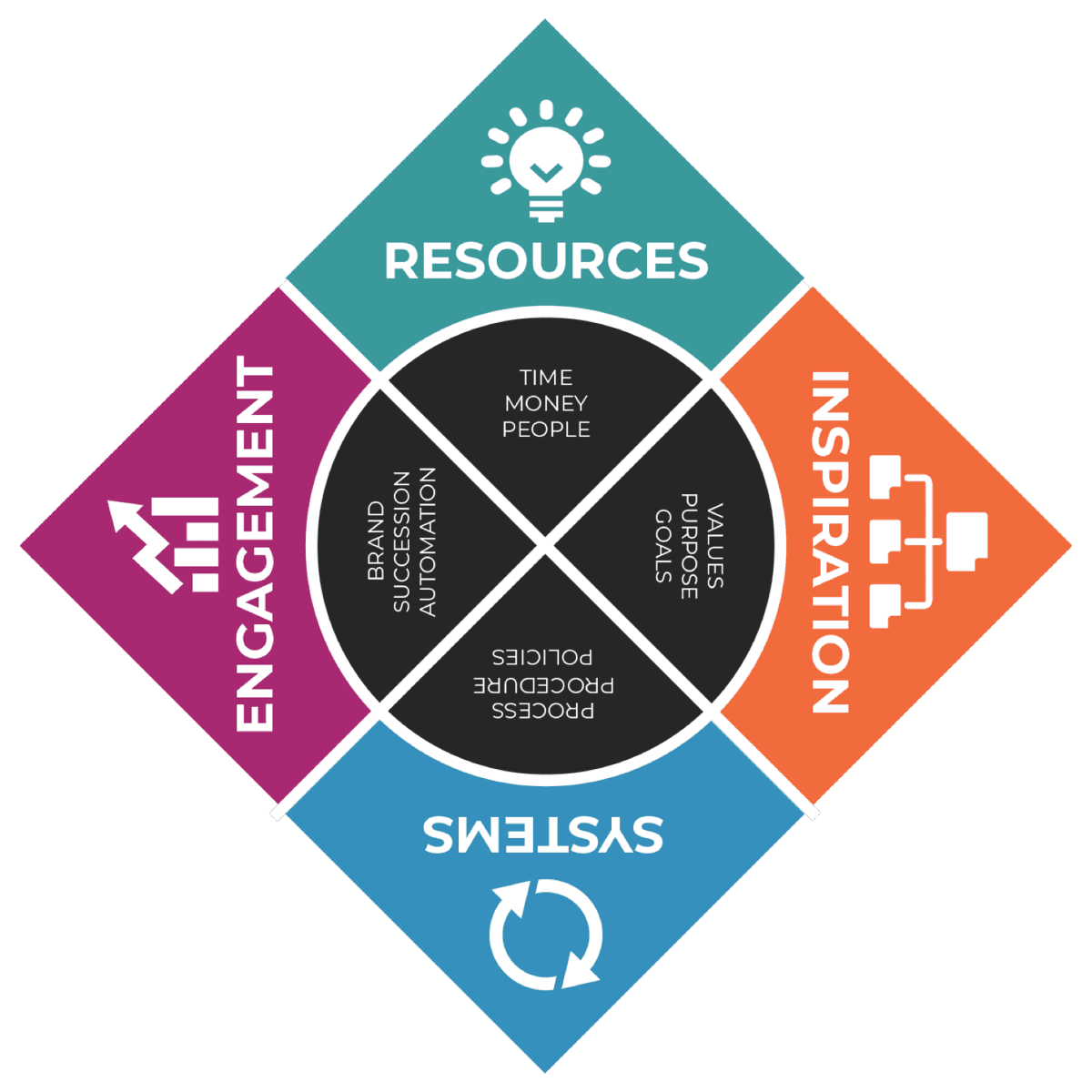
Resources · Topic 2 of 4
What is talent optimization?
By RISE Business Framework · Created by Gary Harper and Brandon McCurdy · Reviewed
Talent optimization is matching people to roles using evidence instead of gut feel. RISE does it with four assessments run in a set order: Desire (Heart), Behavioral (Head), Skills (Hands) and Mobility (Feet). Desire comes before skill, so you confirm someone wants the seat before testing whether they can do it.
Key takeaways
- Four assessments map to Heart, Head, Hands and Feet.
- The order is fixed: Heart, then Head, then Hands, then Feet.
- Desire comes before skill.
- The Behavioral Assessment uses a tool such as Predictive Index, DISC or KOLBE.
Talent Optimization in the RISE Business Framework
Talent Optimization is the second topic in the Resources quadrant. It asks whether the right person is in the right seat. RISE answers with four assessments, each tied to part of the body.
The Heart is desire. The Head is behavior and cognitive ability. The Hands are skills and experience. The Feet are mobility, or what future roles a person could grow into.
Why talent optimization matters
When hiring runs on intuition, you hire for skills on paper and miss whether the person wants the job. Skilled people without desire often deliver below their ability.
Without a behavioral view, you can't see how someone works with others or under pressure. Without a mobility view, you can't plan who will grow into your next critical role.
“In the journey of talent optimization, we explore the Heart, Head, Hands, and Feet - the essential components that define an individual’s potential and contribution within an organization.”Gary Harper
The 4 tools of Talent Optimization
1 of 4
Desire Assessment
The Heart: four questions that show whether a candidate or team member truly wants the role.
2 of 4
Behavioral Assessment
The Head: plot behavioral drives on five factor scales for both Self and Self Concept.
3 of 4
Skills Assessment
The Hands: four questions that test knowledge, experience and results in the role.
4 of 4
Mobility Assessment
The Feet: four willingness questions that show what future roles a person could grow into.
How to build talent optimization with RISE
- 1
Start with the Heart
Review the job description and run the Desire Assessment. Confirm the person wants the role before going further.
- 2
Assess the Head
Run a Behavioral Assessment with a tool such as Predictive Index, DISC or KOLBE. Plot both Self and Self Concept.
- 3
Check the Hands
Use the Skills Assessment to confirm knowledge, skills and experience for the job.
- 4
Look at the Feet
Use the Mobility Assessment to see what future roles the person could someday grow into.
- 5
Use the results to place people
Combine all four views to decide on hiring, seat changes and development.
Quick self-check
“We hire and manage our team using an assessment tool such as Predictive Index, DISC, or KOLBE.”
AI RISE Coach
Assess a candidate with the AI RISE Coach
“Walk me through the Heart, Head, Hands and Feet assessments for a role I'm hiring for.”
Frequently asked questions
What is talent optimization?
Talent optimization is aligning people with roles using structured assessments. In RISE it means assessing desire, behavior, skills and mobility, in that order.
What are the Heart, Head, Hands and Feet in RISE?
Heart is the Desire Assessment, Head is the Behavioral Assessment, Hands is the Skills Assessment and Feet is the Mobility Assessment. RISE runs them in that order.
Should you hire for skill or attitude?
RISE puts desire first. The Desire Assessment comes before the Skills Assessment, because a skilled person who doesn't want the seat rarely performs to their ability.
Which assessment tools work with RISE?
The RISE Business Assessment names Predictive Index, DISC and KOLBE as examples. The workbook's behavioral worksheet is built around Predictive Index factors.
Related in RISE
- Talent Accountability (Resources)
- Talent Development (Resources)
- Culture (Inspiration)
- Leadership (Inspiration)
- The Resources quadrant
Further reading
- The Predictive Index (The Predictive Index)
- Gallup Workplace (Gallup)