Resources › Talent Accountability · 4 of 4
Succession Planning
By RISE Business Framework · Created by Gary Harper and Brandon McCurdy · Reviewed
Succession planning is the process of preparing people to step into critical roles before those roles are vacated. In RISE, you score each critical role 1-3 on five criteria, such as urgent need and internal bench strength. Any position scoring above a total of 10 should be addressed immediately.
How strong is your Resources quadrant? Take the free RISE Business Assessment
How RISE does it
- Identify the critical roles in your business.
- Score each one 1-3 on five criteria: 1 is not descriptive of the role, 3 is very descriptive.
- Add the five scores for a total out of 15.
- Positions scoring above a total of 10 should be addressed immediately.
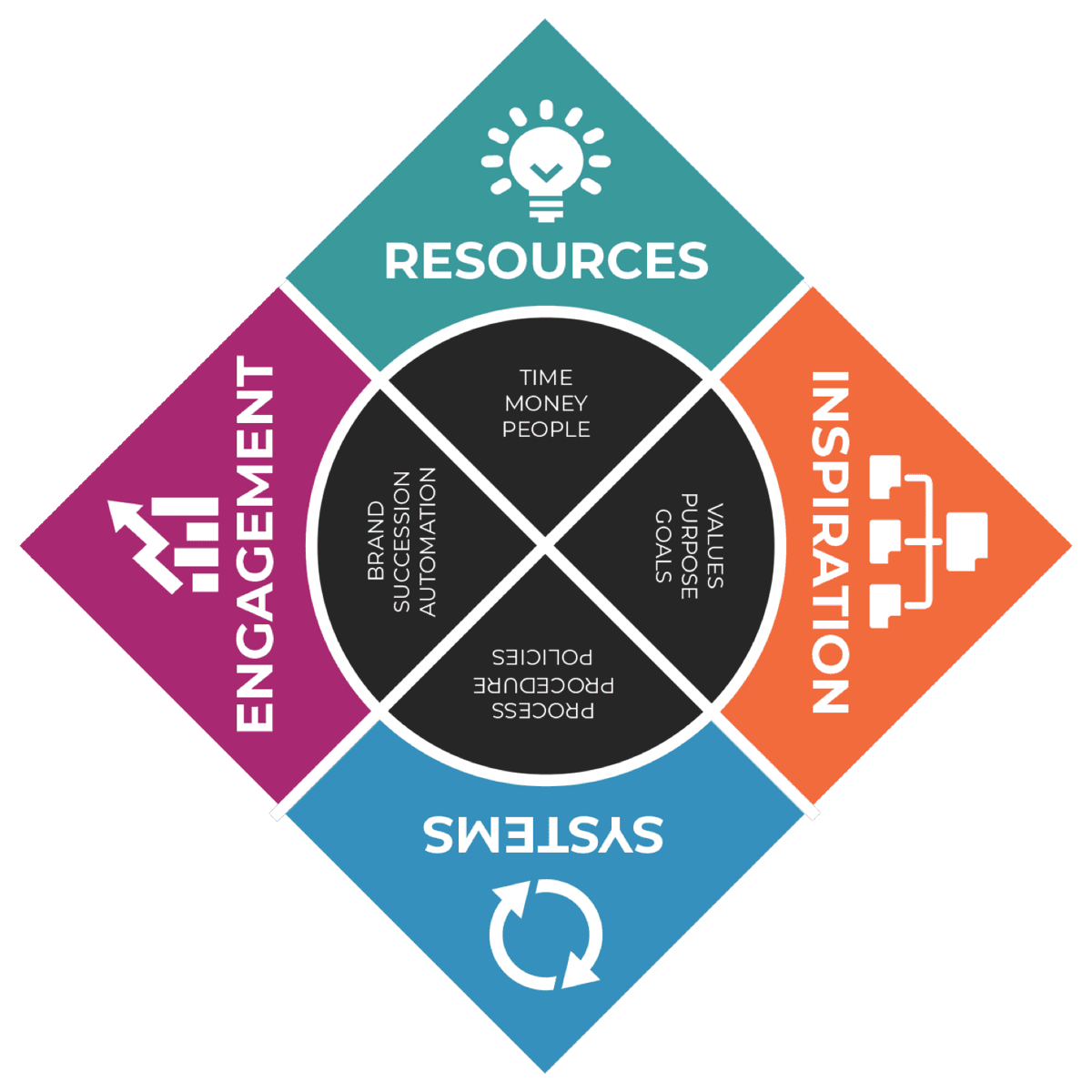
Succession Planning is one of four tools in Talent Accountability, part of the Resources quadrant of the RISE Business Framework.
The RISE tool
Succession Planning scoring grid
Rate each criterion: 1 = Not Descriptive of the Role, 2 = Descriptive of the Role, 3 = Very Descriptive of the Role.
| Critical Role | Urgent Need | Low External Candidate Availability | Poor Internal Bench | Strong Impact on Business | Unique Skill Set or Knowledge | Total |
|---|---|---|---|---|---|---|
| Ops. Manager | 3 | 2 | 3 | 3 | 3 | 14 |
Positions scoring above a total of 10 should be addressed immediately. The Ops. Manager example scores 14.
The RISE tool · score yours
Succession Planning scorecard
Name each critical role, then rate every factor: 1 = not descriptive of the role, 2 = descriptive, 3 = very descriptive. Roles that score above 10 should be addressed immediately. Your answers aren’t saved.
- Urgent Need
- Low External Candidate Availability
- Poor Internal Bench
- Strong Impact on Business
- Unique Skill Set or Knowledge
- Urgent Need
- Low External Candidate Availability
- Poor Internal Bench
- Strong Impact on Business
- Unique Skill Set or Knowledge
- Urgent Need
- Low External Candidate Availability
- Poor Internal Bench
- Strong Impact on Business
- Unique Skill Set or Knowledge
How to build a succession plan with the RISE scorecard
RISE turns succession planning into a scorecard. You score every critical role on five risk factors, total them, and address any role above 10 now, before someone leaves.
- 1
List your critical roles
Start with the roles on your Organizational Chart and Process Ownership Chart that the business could not run without for a month.
- 2
Score Urgent Need
Rate each factor 1 to 3: 1 is not descriptive of the role, 2 is descriptive, 3 is very descriptive. Urgent Need asks how soon you would need to fill the role if it opened.
- 3
Score Low External Candidate Availability
How hard would it be to hire this role from outside?
- 4
Score Poor Internal Bench
Is there no one inside the business ready to step in?
- 5
Score Strong Impact on Business and Unique Skill Set
How much would losing this person hurt results, and how much of what they know lives only in their head?
- 6
Total each role and act above 10
Each role totals 5 to 15. RISE's rule: positions scoring above 10 should be addressed immediately. In the workbook example, an Operations Manager scores 14.
- 7
Build the bench
For each high-risk role, name a successor, document the role's processes in Procedure Guides, and use the Mobility Assessment to see who could grow into it.
Succession planning example
The RISE workbook scores an Operations Manager: Urgent Need 3, Low External Candidate Availability 2, Poor Internal Bench 3, Strong Impact on Business 3, Unique Skill Set or Knowledge 3. Total 14, well above 10, so that role gets a successor plan this quarter.
How to lower a role's score
You cannot change how important a role is, but you can change the risk. Cross-training improves the internal bench. Documenting procedures reduces unique knowledge. Keeping relationships with outside candidates improves availability. Re-score after each change.
Succession planning for small businesses
In a small business, the owner is usually the highest-scoring role. Score yourself honestly. RISE places succession planning in the Resources quadrant because a business that depends on one person is not yet self-sustaining.
“Critical roles are the keystones of your organization's success. Succession planning is the process that ensures they are never left unguarded.”Gary Harper
AI RISE Coach
Work through Succession Planning with the AI RISE Coach
“Walk me through Succession Planning in the RISE Business Framework and help me apply it to my business.”
Quick self-check
“We assign ownership for each process in the business to a single team member so accountability is clear.”
Frequently asked questions
How do you create a succession plan for a small business?
List your critical roles, then score each on urgent need, external candidate availability, internal bench, business impact and unique skills. RISE says any role scoring above 10 should be addressed immediately.
What is a critical role?
A critical role is a seat your business cannot afford to leave empty. The RISE grid flags roles with strong business impact, unique skills and a weak internal bench.
When should a business start succession planning?
Now, for any role scoring above 10 on the RISE grid. Those roles are already a risk to your business.
Articles on Succession Planning
The other tools in Talent Accountability
- Organizational ChartDefine structure, roles and the chain of command so everyone knows who has authority over what.
- Process Ownership ChartA four-tier chart that names who innovates, leads, manages and owns each core process.
- Process CommitmentFour questions asked of each team member to confirm they are committed to their seat.
Related in another quadrant: Process Execution