Resources · Topic 4 of 4
What is finance?
By RISE Business Framework · Created by Gary Harper and Brandon McCurdy · Reviewed
Business finance is planning, recording and reviewing the money that flows through your company. RISE treats it as a four-step cycle. Project it with a Pro Forma, plan it with a Budget, record it on a P&L, and compare it with a Variance Report. Pro Formas and P&Ls share line items.
Key takeaways
- The cycle is project, plan, record, compare.
- Pro Formas and P&Ls use the same line items, so projection and actual sit side by side.
- Budgets run in four blocks: operating and non-recurring expenses, operating and non-operating income.
- Variance reports compare Budget to Actual and assign an Outcome to each gap.
Finance in the RISE Business Framework
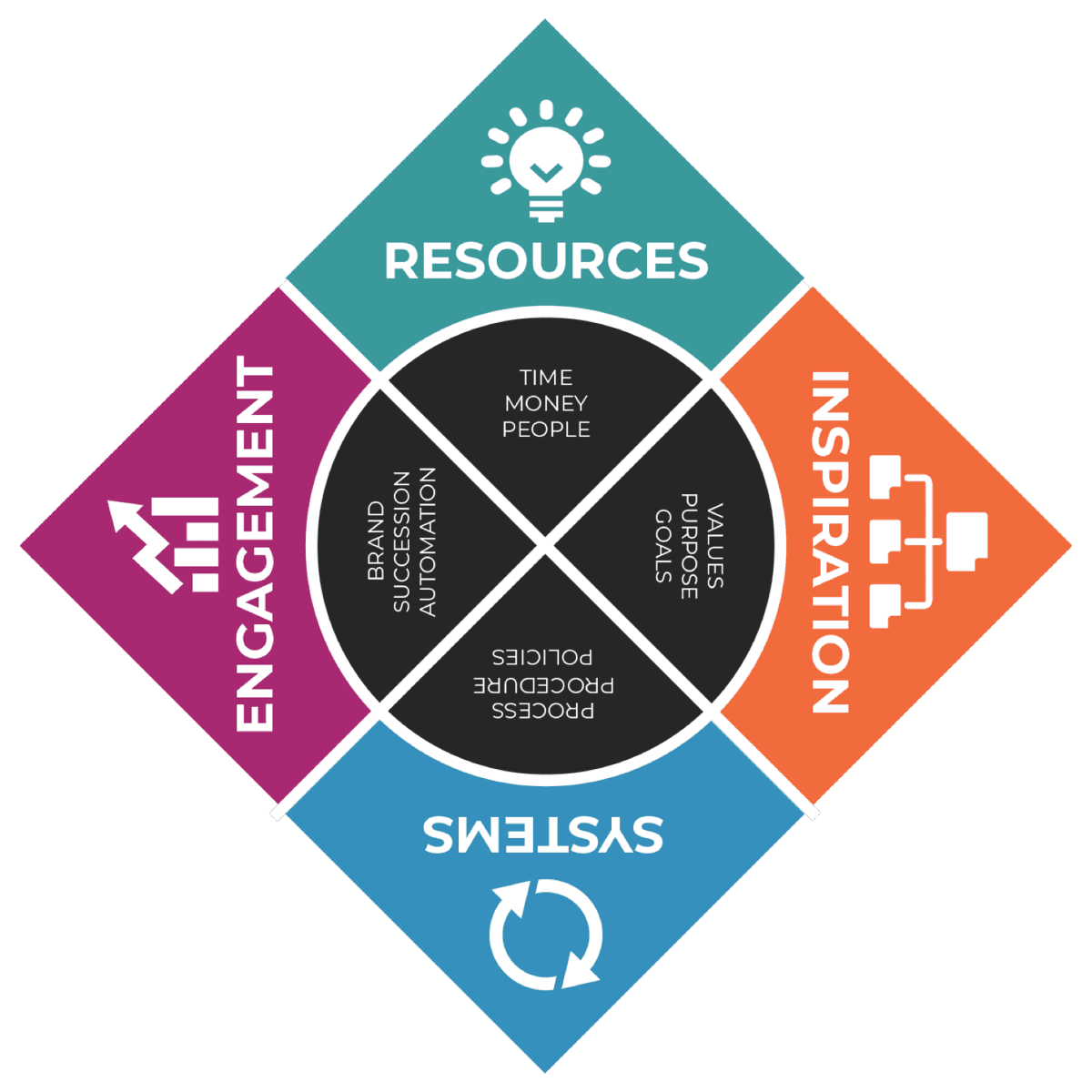
Finance is the fourth topic in the Resources quadrant. The Resources quadrant is complete when a business is self-sustaining, can pay its own expenses and makes a profit each month. Finance is how you know.
Companies that implement RISE use four worksheets in a cycle. Pro Formas project the future, Budgets plan spending, P&Ls record what happened, and Variance Reports compare plan to actual.
Why finance matters
When records are messy, you can't produce an accurate report on demand. Decisions about hiring, pricing and spending get made on guesses.
Without a budget and variance report, overspending goes unnoticed until cash runs short. Without a Pro Forma, you can't tell whether growth will stay profitable.
“A pro forma is the roadmap to financial aspirations, and a budget is the vehicle that gets you there. Without one, the journey lacks direction; without the other, it lacks motion.”Gary Harper
The 4 tools of Finance
1 of 4
Pro Formas
Project income and expenses across three periods to see whether the business will stay profitable.
2 of 4
Budgets
Plan spending and income in four blocks so you can cut costs and fund growth on purpose.
3 of 4
P&Ls
Record actual income and expenses for a period using the same line items as your Pro Forma.
4 of 4
Variance Reports
Compare budget to actual line by line, calculate the variance and assign an outcome.
How to build finance with RISE
- 1
Project with a Pro Forma
Project income, non-recurring expenses and expenses across three periods.
- 2
Plan with a Budget
Fill the four budget blocks: operating expenses, non-recurring expenses, operating income and non-operating income.
- 3
Record on a P&L
Record actual results using the same line items as your Pro Forma.
- 4
Compare with a Variance Report
List Budget and Actual for each item, calculate the Variance and assign an Outcome.
- 5
Adjust and repeat
Use what the variances show to update your next Pro Forma and Budget.
Quick self-check
“We keep our financial records organized and clean and can generate accurate reports when needed.”
AI RISE Coach
Review your numbers with the AI RISE Coach
“Help me compare my budget to my P&L and build a variance report.”
Frequently asked questions
What financial reports does a small business need?
RISE uses four. A Pro Forma projects, a Budget plans, a P&L records actuals and a Variance Report compares plan with actual.
How do I know if my financial records are clean?
You can generate accurate reports when needed. That is the RISE Business Assessment standard for Finance.
What is the difference between a pro forma and a budget?
A Pro Forma projects whether the business will stay profitable over time. A Budget allocates income to expenses, savings and priorities so the plan can happen.
When is a business self-sustaining?
In RISE, the Resources quadrant is complete when a business can pay its own expenses and makes a profit each month.
Related in RISE
- Talent Development (Resources)
- Stoplight Reports (Systems)
- Short-Term Vision (Inspiration)
- The Resources quadrant
Further reading
- Manage your finances (U.S. Small Business Administration)
- Profit and Loss (P&L) Statement (Investopedia)
- Variance Analysis (Corporate Finance Institute)