Systems › Stoplight Reports · 3 of 4
Key Performance Indicators
By RISE Business Framework · Created by Gary Harper and Brandon McCurdy · Reviewed
Key Performance Indicators are measures of business results. In RISE they are tracked weekly by function, with owners in Marketing, Sales and Finance. The report runs weeks 1 through 12 in three four-week blocks, each ending with an ADJUST row. They are reviewed in the weekly Organizational Meeting.
How strong is your Systems quadrant? Take the free RISE Business Assessment
How RISE does it
- Result measures, owned by Marketing, Sales and Finance.
- Seven sample indicators, from Customer Lifetime Value to Over Budget (Op. Ex.).
- Reported W1 through W12 in three four-week blocks.
- Binary Y/N indicators are allowed.
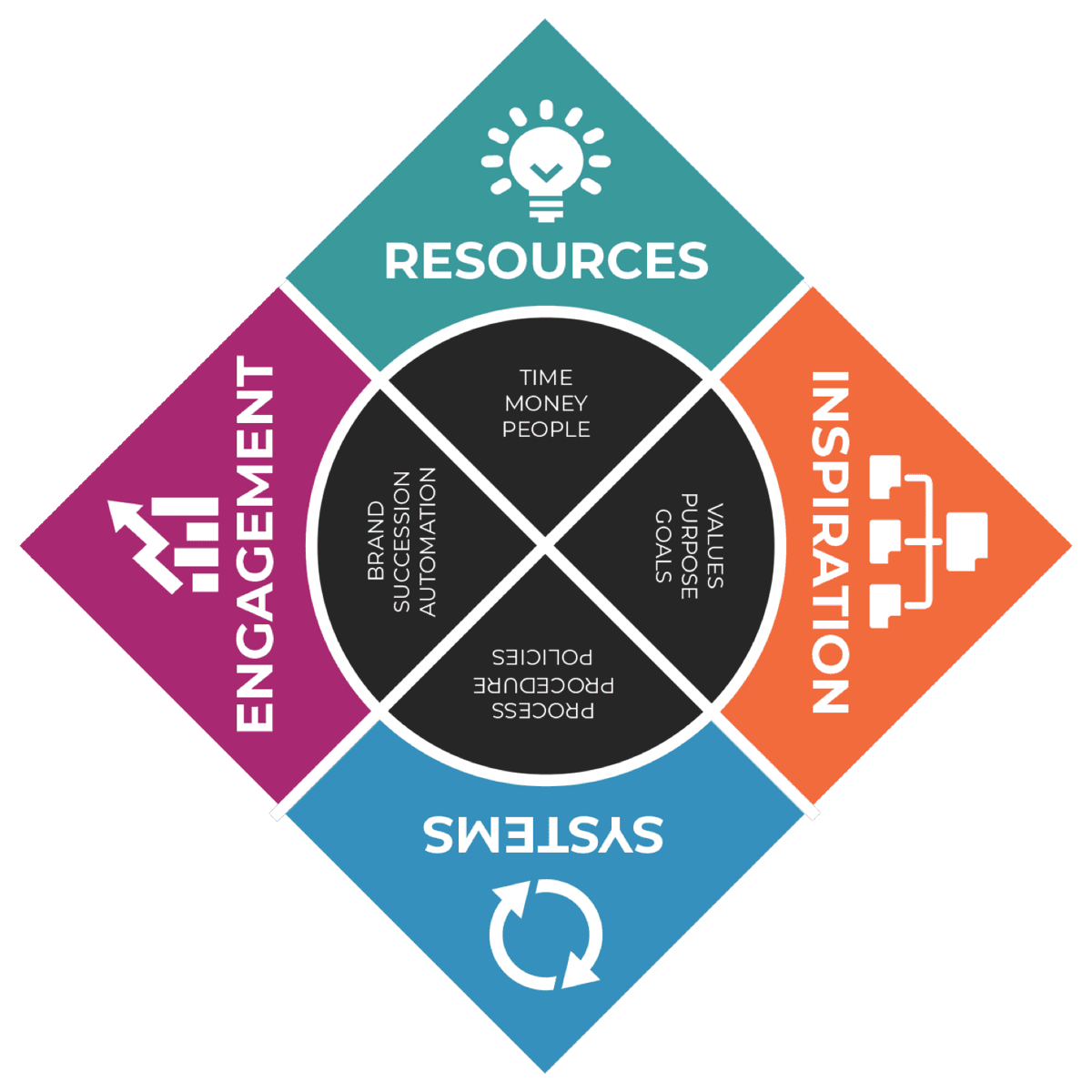
Key Performance Indicators is one of four tools in Stoplight Reports, part of the Systems quadrant of the RISE Business Framework.
The RISE tool
Key Performance Indicator report (W1 to W4 sample)
| Owner | Performance Indicator | Target | W1 | W2 | W3 | W4 |
|---|---|---|---|---|---|---|
| Marketing | Customer Lifetime Value | $58k | $60k | $57k | $57k | $60k |
| Marketing | Customer Acquisition Cost | $3k | $2700 | $3k | $3k | $2700 |
| Marketing | Leads | 20 | 18 | 25 | 22 | 19 |
| Sales | Appointment | 10 | 4 | 10 | 10 | 3 |
| Sales | Transactions | 2 | 2 | 3 | 2 | 0 |
| Finance | Profit Per Transaction | $29k | $30k | $28k | $29k | $27k |
| Finance | Over Budget (Op. Ex.) | Y/N | N | Y | N | Y |
Each four-week block closes with ADJUST.
How to set key performance indicators, step by step
A KPI is only useful when someone owns it, it has a target, and the team looks at it on a set rhythm. RISE keeps Key Performance Indicators to weekly result measures by function, so the list stays short enough to review in one meeting.
- 1
Start from the result, not the activity
Ask what each function has to produce every week. Marketing produces leads and customers at a cost. Sales produces appointments and transactions. Finance protects profit per transaction and the budget. Activity measures like dials and calls belong on the Key Process Indicators report instead.
- 2
Pick a handful per function
The RISE sample uses seven: Customer Lifetime Value, Customer Acquisition Cost and Leads for Marketing; Appointment and Transactions for Sales; Profit Per Transaction and Over Budget (Op. Ex.) for Finance. Start there and swap in what fits your business.
- 3
Give every row one owner
Put a name or a seat next to each indicator. A number that belongs to everyone gets explained by no one.
- 4
Set a weekly target
Write the number that means the week went well. Yes/no indicators are allowed, such as whether operating expenses went over budget.
- 5
Report weeks 1 to 12
Fill in the actual every week in three four-week blocks. Close each block with an ADJUST row where you raise, lower or replace a target that no longer guides decisions.
- 6
Review it in the weekly meeting
RISE reviews Key Performance Indicators in the weekly Organizational Meeting. Anything off target goes on the RISE Issues List to be solved, not just reported.
Key performance indicator examples by team
Marketing: Customer Lifetime Value, Customer Acquisition Cost, Leads. Sales: Appointments, Transactions. Finance: Profit Per Transaction, Over Budget (Op. Ex.). These are results the owner can be held to each week.
For marketing channels specifically, the advertising metrics page covers CTR, CPC, conversion rate and ROI.
Where KPIs fit with the other three reports
RISE runs four Stoplight Reports on four rhythms. The Key Purpose Indicator is reviewed quarterly, Key Profit Indicators monthly, Key Performance Indicators weekly and Key Process Indicators daily. Keeping them apart stops mission measures from getting lost among daily activity.
Common KPI mistakes
Tracking too many numbers, so none get attention. Mixing activity with results, so a busy week looks like a good one. Leaving targets untouched for a year. The ADJUST row at the end of every four weeks exists to catch that last one.
“Key Performance Indicators are the weekly check-ups of a business's vitality. They tell you whether you're sprinting towards your goals or stumbling in the dark.”Gary Harper
AI RISE Coach
Work through Key Performance Indicators with the AI RISE Coach
“Walk me through Key Performance Indicators in the RISE Business Framework and help me apply it to my business.”
Quick self-check
“We have key numbers that each team member knows and tracks on a daily, weekly and monthly basis.”
Frequently asked questions
What is the difference between a KPI and a metric?
A metric is any number you measure. A KPI is a metric tied to a target and an owner that shows whether a key goal is on track.
How often should KPIs be reviewed?
In RISE, Key Performance Indicators are reviewed weekly. Purpose is quarterly, Profit is monthly and Process is daily.
The other tools in Stoplight Reports
- Key Purpose IndicatorsOne clear measure that shows the business is accomplishing the purpose it was born to accomplish, reviewed quarterly.
- Key Profit IndicatorsFour monthly financial measures: Revenue, Profit Margin, Cash on Hand and Cash Conversion Cycle.
- Key Process IndicatorsDaily activity and defect measures for Marketing, Sales, Operations and Finance, many with a target of zero.
Related in another quadrant: Long-Term Vision