Inspiration › Leadership · 2 of 4
Leadership vs Management
By RISE Business Framework · Created by Gary Harper and Brandon McCurdy · Reviewed
Leadership sets direction and inspires people. Management organizes the work so the direction gets delivered. RISE measures both with two parallel 20-statement assessments. You rate each statement from 1 (not accurate) to 3 (very accurate) and total each one. Low-scoring items show where you need growth and training.
How strong is your Inspiration quadrant? Take the free RISE Business Assessment
How RISE does it
- Two 20-item instruments, one for leadership and one for management, share one scoring rule.
- Each statement is scored 1 = not accurate, 2 = somewhat accurate, 3 = very accurate.
- Each assessment ends in a TOTAL. RISE publishes no cutoff bands.
- Compare the two totals, then review item by item. Lower-scoring areas are opportunities for growth and training.
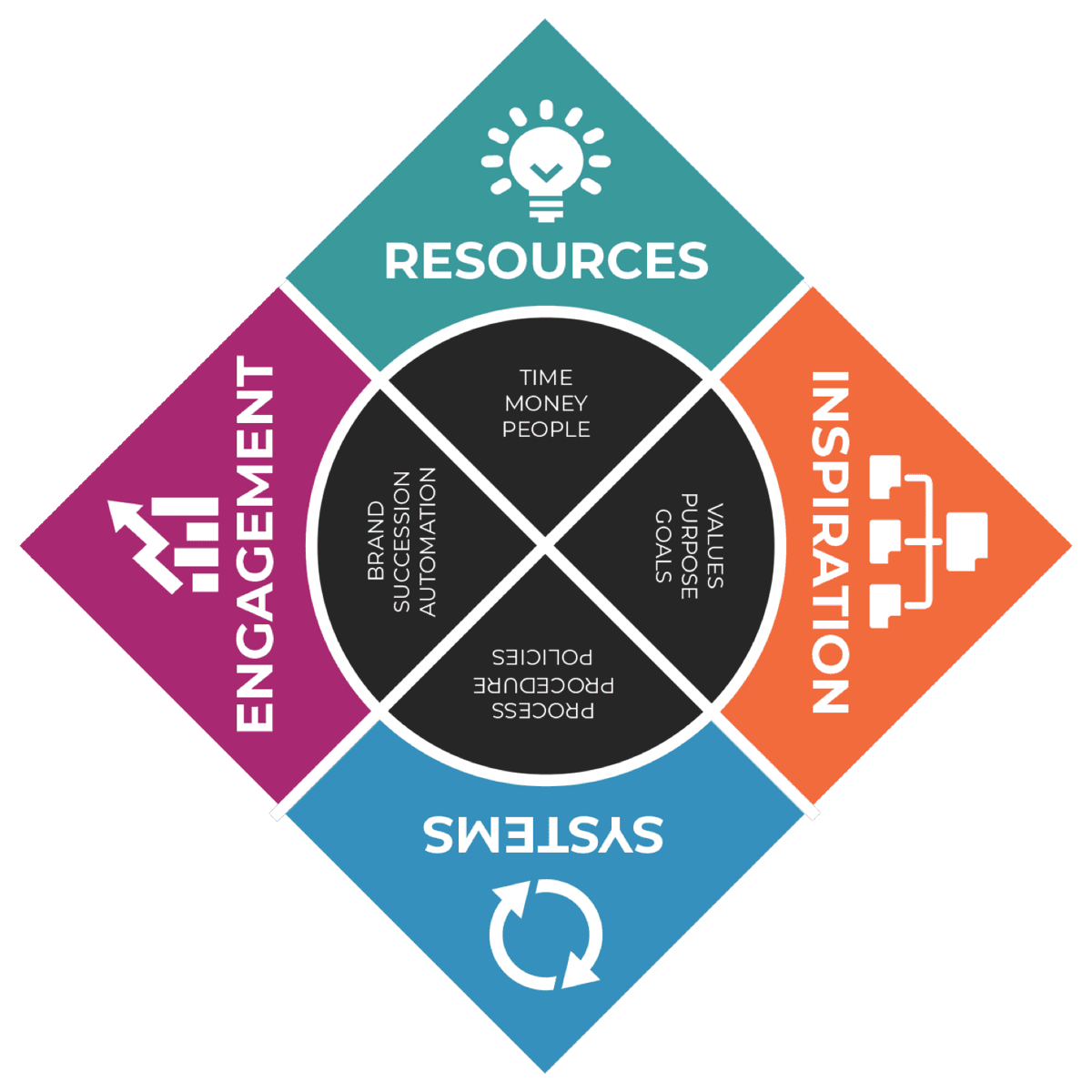
Leadership vs Management is one of four tools in Leadership, part of the Inspiration quadrant of the RISE Business Framework.
The RISE tool
Sample statements from each assessment
On a scale of 1-3, honestly score each question (1 = not accurate | 2 = somewhat accurate | 3 = very accurate).
| Leadership Assessment | Management Assessment |
|---|---|
| I am adept at creating a positive and inspirational vision of the future and conveying that vision in an engaging manner that attracts committed followers | I possess the skill to quickly identify and communicate problems, obstacles, and barriers. |
| I embrace change and view the use of new ideas and processes as progress. I strive to find better and faster ways to achieve success | I excel at translating ideas into actionable plans and making them a reality. |
| I feel as a leader, I am instrumental in developing new leaders to play an important role in the future of the company | I am comfortable with being held accountable and holding others accountable, establishing a culture of responsibility throughout the organization. |
| I embrace being the face of the organization and enjoy the accountability of the success or failure of the business | I derive great satisfaction from overseeing the day-to-day operations of the business and ensuring punctuality. |
Four of 20 statements shown from each assessment. Each assessment ends in a TOTAL.
Leadership vs management: how RISE tells them apart
RISE puts it in one line: if leadership is about doing the right things, management is about doing things right. A business needs both, and most owners are stronger at one. RISE measures each with its own 20-statement assessment so you can see which.
- 1
Take the Leadership Assessment
Score 20 statements from 1 to 3, where 1 is not accurate, 2 is somewhat accurate and 3 is very accurate. They cover vision, learning, innovation, relationships and being the face of the organization.
- 2
Take the Management Assessment
Score its 20 statements on the same scale. They cover spotting problems, turning ideas into plans, leading people day to day and keeping the work on track.
- 3
Compare the two totals
Each assessment totals 20 to 60. RISE publishes no pass mark. The point is the comparison: which side comes more naturally to you, and how wide the gap is.
- 4
Circle your lowest statements
RISE says the areas that scored lower are opportunities for growth and training. Pick two or three to work on this quarter.
- 5
Fill the gap with people, not just effort
If you are a strong leader and a weak manager, put a strong manager next to you and delegate. The Art of Delegation shows how. If it is the other way around, find someone who can carry the vision.
The difference between leadership and management
Leadership sets direction. It creates a vision people want to follow, challenges the way things are done, and develops new leaders. Management delivers on that direction. It turns ideas into plans, removes obstacles, holds people to the process and keeps the numbers moving.
In RISE, leaders sit at the top of the Process Ownership Chart as the people who innovate and lead, and managers sit beneath them, holding their teams to each process.
Leadership vs management examples
A new competitor enters your market. Leadership asks whether your position still makes sense and rallies the team around the answer. Management updates the sales process, retrains the team and tracks the results weekly.
A key employee resigns. Leadership asks what kind of team you are building and who should grow into the seat. Management covers the work this week and runs the hiring process. Both responses are needed, and they are rarely the same person's strength.
Where this fits in RISE
Leadership is the first topic in Inspiration, the second RISE quadrant. Pair this assessment with the Leadership Audit, and see the Importance of Leadership for the four pillars RISE builds leaders on: challenge, inspire, model and empower.
“If leadership is about doing the right things, management is about doing things right.”Gary Harper
AI RISE Coach
Work through Leadership vs Management with the AI RISE Coach
“Walk me through Leadership vs Management in the RISE Business Framework and help me apply it to my business.”
Frequently asked questions
What is the difference between leadership and management?
Leadership is about doing the right things: vision, inspiration and new ideas. Management is about doing things right: plans, accountability and day-to-day execution.
How do I know if I am more of a leader or a manager?
Take both RISE assessments and compare your totals. Then look at which individual statements scored a 1.
Is a leadership assessment pass or fail?
No. RISE publishes no cutoff scores. The totals are read comparatively, and low items point to growth and training.
The other tools in Leadership
- Importance of LeadershipThe RISE leadership model: challenge, inspire, model and empower, which together encourage the people you lead.
- Art of DelegationMatch each handoff to what the person needs: instruction, a budget, feedback or autonomy.
- Leadership AuditFour simple questions you answer every week to check how you are leading.
Related in another quadrant: Talent Accountability