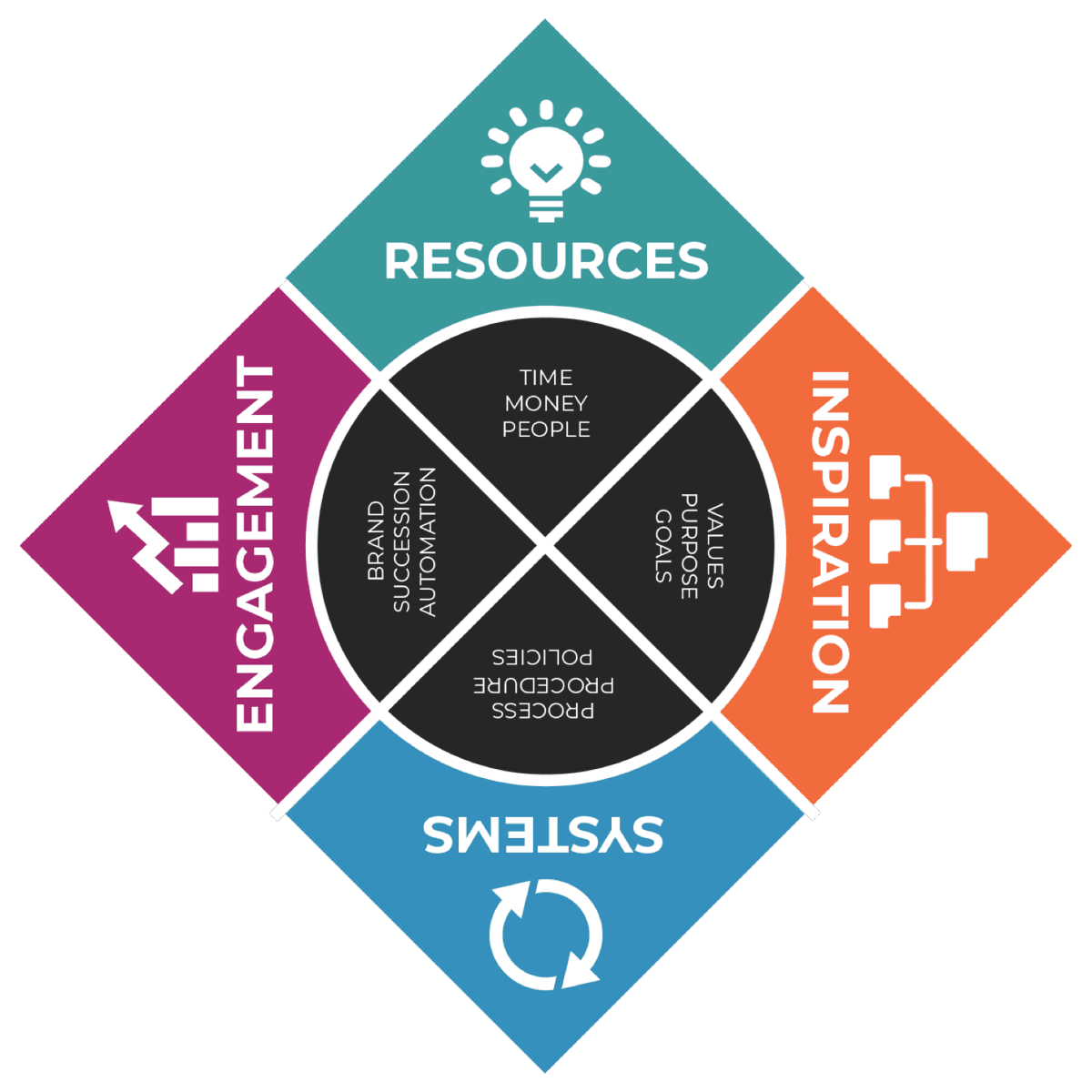
Engagement · Topic 1 of 4
What is branding?
By RISE Business Framework · Created by Gary Harper and Brandon McCurdy · Reviewed
Branding is how people recognize, remember and feel about your business. It covers visuals, messaging and every customer touchpoint. In RISE, branding is the first Engagement topic. You score your brand with a Brand Audit, choose one Brand Feeling, document it in a Brand Guide, and build toward Brand Insistence.
Key takeaways
- RISE treats branding as the foundation of the Engagement quadrant.
- The four steps run as a cycle: Brand Audit, Brand Feeling, Brand Guide, Brand Insistence.
- The Brand Audit scores 16 statements across Visual Identity, Messaging, Internal and Advertising.
- The Brand Feeling exercise narrows 48 words down to the one feeling your brand must evoke.
- Brand Insistence comes from being known, different, valuable and loved.
Branding in the RISE Business Framework
Branding is the first of four Engagement topics in RISE, alongside Marketing, Advertising and Sales. RISE describes it as more than a logo or tagline. It is the summation of who your business is.
RISE says a business should first "earn the right to engage." That means scoring 10 or higher in Resources, Inspiration and Systems. Then branding work has a stable business to stand on.
Why branding matters
Without a defined brand, every ad, post and sales call says something slightly different. Customers struggle to remember you or explain why you are different.
Investing in engagement before the foundation is ready carries its own risk. RISE warns it can overwhelm your resources, disrupt your systems and damage your goals.
“A strong brand isn't just recognized; it's trusted.”Gary Harper
The 4 tools of Branding
1 of 4
Brand Audit
Score your brand's visuals, messaging, team alignment and advertising to see where it stands today.
2 of 4
Brand Feeling
Narrow 48 words down to the one emotion your brand must evoke in every touchpoint.
3 of 4
Brand Guide
Document your brand script, colors, typefaces and logo usage so everyone represents the brand the same way.
4 of 4
Brand Insistence
Grow awareness, differentiation, value and emotional connection until customers seek you out first.
How to build branding with RISE
- 1
Run a Brand Audit
Rate 16 statements from 1 to 3 across Visual Identity, Messaging, Internal and Advertising. Total each category.
- 2
Define your Brand Feeling
Cross out 40 of 48 words, circle the 5 that fit best, then choose the one feeling your brand must evoke.
- 3
Write your Brand Guide
Fill in your Brand Script, company history, three brand colors, two typefaces and three logo usages.
- 4
Share the guide
Give the Brand Guide to your team and outside partners such as ad agencies and web developers.
- 5
Build Brand Insistence
Grow awareness, relevant differentiation, value and emotional connection so customers think of you first.
Quick self-check
“We have a logo, brand guide, and consistent digital presence that keeps us top-of-mind with customers.”
AI RISE Coach
Build your brand with the AI RISE Coach
“Help me run a brand audit and define the one feeling my brand must evoke.”
Frequently asked questions
What are the key elements of branding for a small business?
In RISE, branding covers your visual identity, messaging, internal culture and advertising. These are the four categories scored in the Brand Audit. A Brand Guide then documents your script, colors, typefaces and logo usage.
When should a business invest in branding?
RISE says a business should earn the right to engage first. That means scoring 10 or higher in Resources, Inspiration and Systems on the RISE Business Assessment.
What is the difference between brand loyalty and brand insistence?
RISE calls brand insistence the pinnacle of brand loyalty. It is the point where customers keep you top-of-mind and seek you out when they buy or recommend.
Related in RISE
- Marketing (Engagement)
- Long-Term Vision (Inspiration)
- Culture (Inspiration)
- The Engagement quadrant
Further reading
- Marketing and sales (U.S. Small Business Administration)
- StoryBrand (StoryBrand)
- Branding articles (Harvard Business Review)